What Not to Flush
What you flush matters: Don't put "flushable" wipes into your toilet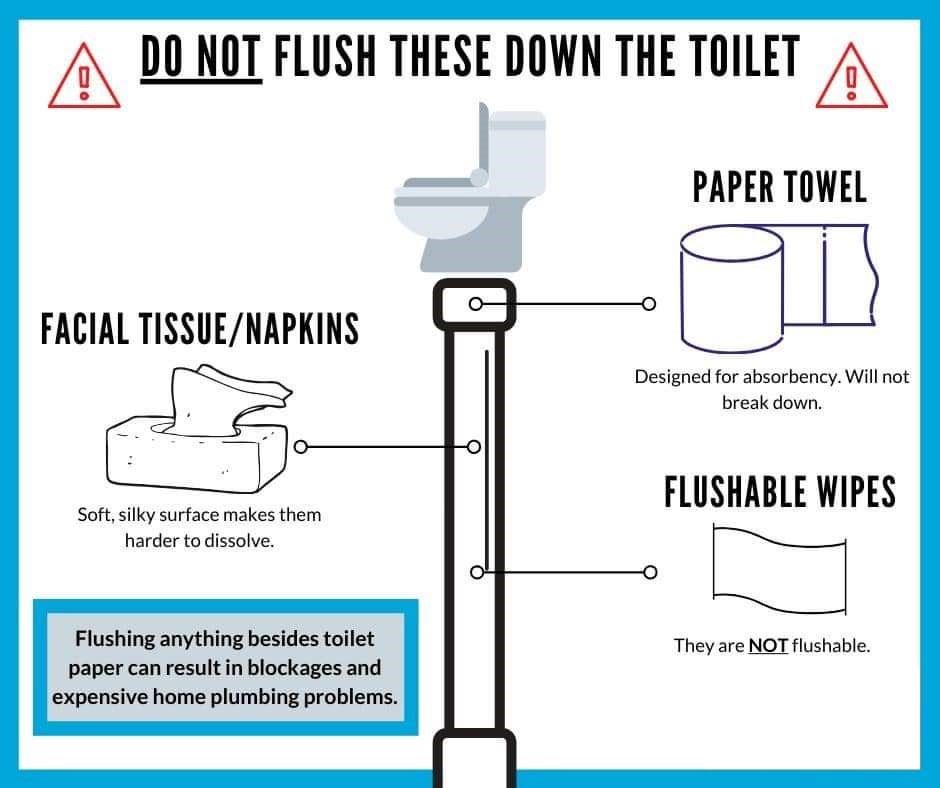
A 2019 study tested 101 single-use wipes and not one of them passed a "flushability" test. The wipes failed to fall apart or disperse safely in the tests according to Ryerson University in Ontario. Even if an item is small or if the package says "flushable," everyday things flushed down a toilet can cause messy sewage backups in your home/building plumbing. Downstream "flushable" wipes create blockages in city sanitary sewers resulting in overflows or sewage backups into homes.
"Flushable" wipes are clogging pumps and damaging the city's sanitary lift stations.
Flush with care - only flush the 3 Ps
Your toilet is an important fixture that has been skillfully designed for only one activity. Although people know what that activity is, many people misuse their toilets and don't flush with care. The toilet is not a trashcan. Flushing with care means to only flush the 3Ps - PEE, POOP AND PAPER (toilet). Everything else should be deposited in the trashcan, recycled, or composted.
Flushing items that don't belong in the toilet can harm the local sewer system, water reclamation plants, and the water environment. Flushing with care can prevent costly damage from sewer overflows and backups.
What not to flush
Any kind of wipes, including those labeled "flushable" or "biodegradable."
- Paper Towels
- Facial Tissue
- Contact Lenses
- Dental Floss
- Diapers (includes products such as inserts, liners, etc.)
- Hair
- Cat Litter
- Fish
- Personal Hygiene Products
- Cosmetics
- Medication & Vitamins
- Medical Supplies
- Cotton Swabs
- Cleaning Products
- Food
- Fats, Oils & Grease
- Household Hazardous Waste, including paint, oil, chemicals, fuel, etc.
- Toothbrushes
- Plastic Items
Protect your pipes
Wipes are touted as disposable and flushable, but they are causing serious and costly problems to the city’s sewer system.
These products appeal to consumers in part because of manufacturers' claims that they can be conveniently flushed down the toilet. But their cloth-like material doesn't break down in the sanitary sewer system like toilet paper and can block sewer lines, clog pumps and increase maintenance and repair costs.
Only human waste and toilet paper should be flushed. Flushing other products down your toilets can create blockages and sewer backups in your home. These backups could mean expensive repairs to fix damage to your home or to unclog your pipes.
Protect your pipes! Never flush anything other than human waste and toilet paper.